

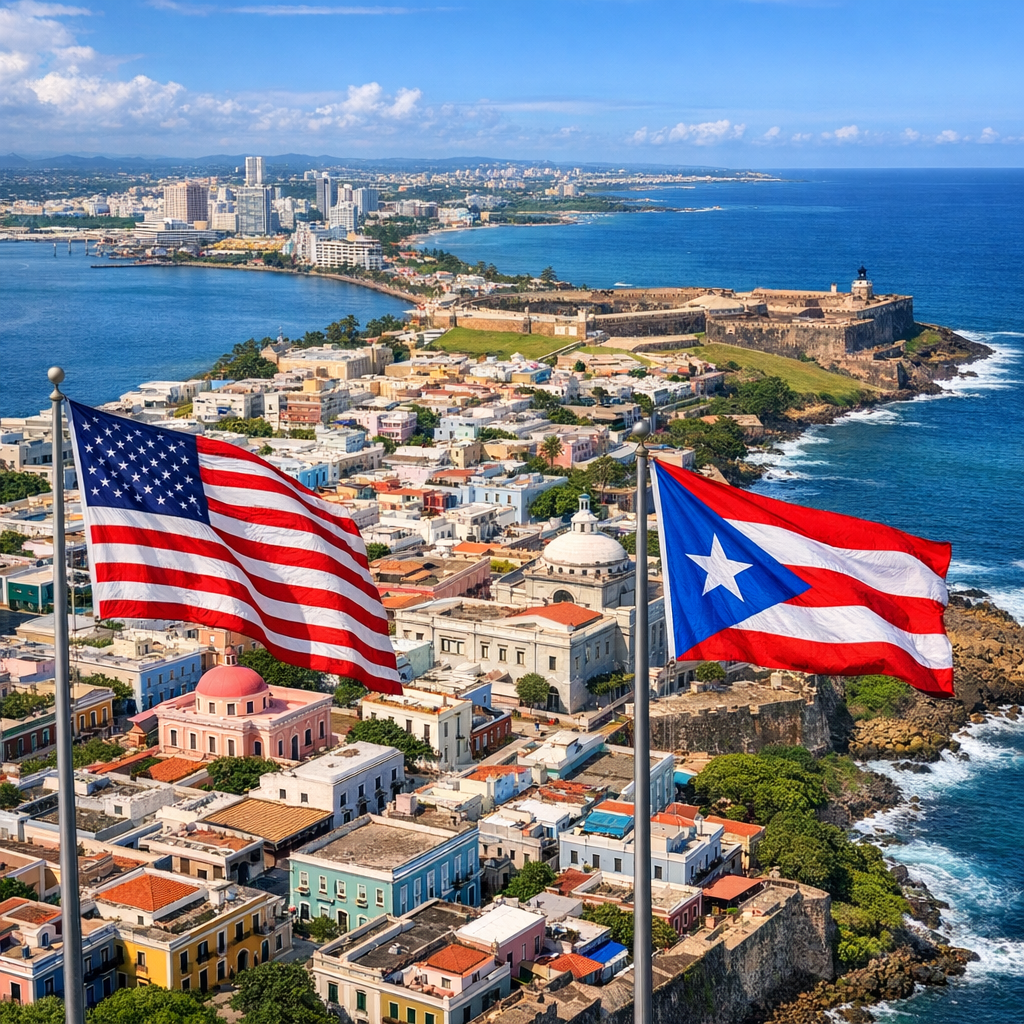
Puerto Rico, an island territory in the Caribbean, has been intricately linked to the United States since 1898, following the Spanish-American War. This relationship has shaped the island’s political, economic, and social landscape, leading to a unique status that often prompts questions about its residents’ rights and representation.
Citizenship and Political Rights
In 1917, the Jones-Shafroth Act granted U.S. citizenship to individuals born in Puerto Rico. This means that Puerto Ricans carry U.S. passports, can move freely between the island and the mainland, and are eligible to serve in the U.S. military. However, despite this citizenship, certain political rights differ from those of residents in the states.
Notably, Puerto Ricans residing on the island cannot vote in U.S. presidential elections. This is because the Electoral College system allocates votes to states and the District of Columbia, excluding territories like Puerto Rico. Additionally, while the island elects a Resident Commissioner to the U.S. House of Representatives, this position lacks voting power on the final passage of legislation. Puerto Rico also does not have representation in the U.S. Senate. These distinctions stem from the island’s status as an unincorporated territory, which means it is under U.S. sovereignty but not fully integrated into the country.
Economic Landscape
Economically, Puerto Rico operates under the U.S. currency system, with the Federal Reserve regulating its money supply. The island has a diverse economy, with significant contributions from manufacturing sectors such as pharmaceuticals, electronics, and textiles. Trade plays a vital role, generating about one-tenth of the Gross Domestic Product (GDP) and employing a significant portion of the workforce. Additionally, finance, real estate, and insurance sectors contribute substantially to the GDP, though they employ a smaller segment of the population.
Despite these economic activities, Puerto Rico has faced challenges, including the loss of certain federal tax provisions and the accumulation of substantial debt. Natural disasters and other external factors have further impacted the island’s economic stability, leading to ongoing discussions about its political status and economic future.
Representation and Advocacy
The limited political representation has led to advocacy efforts both on and off the island. Public figures and local leaders have highlighted the disparities in representation and the need for a more equitable relationship with the federal government. Discussions about statehood, enhanced autonomy, or other political arrangements continue to be central topics in Puerto Rican discourse.
Understanding Puerto Rico’s unique relationship with the United States is essential for comprehending the complexities of its political status, the rights of its citizens, and the economic challenges and opportunities it faces. As discussions about the island’s future continue, it’s crucial to recognize the historical context and current realities that shape this dynamic.