

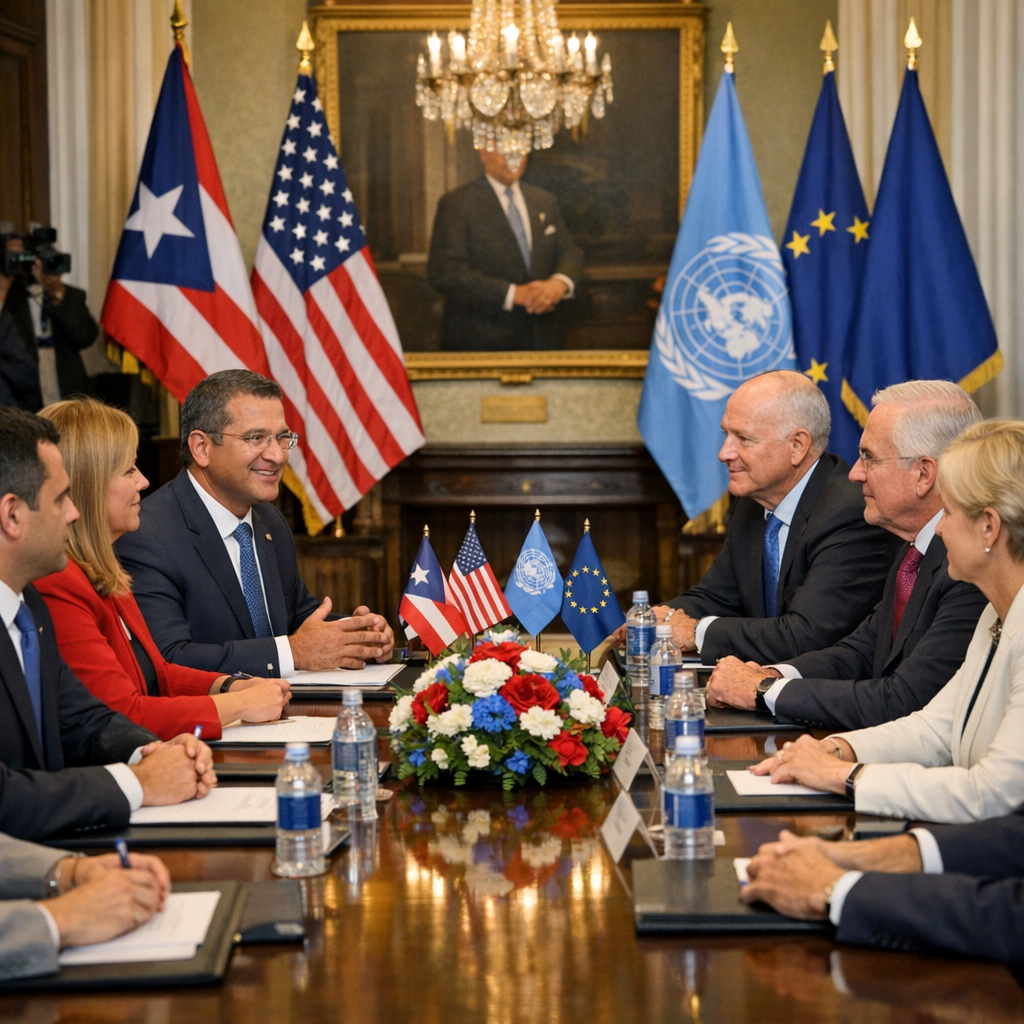
Puerto Rico occupies a unique position in the realm of international relations. As an unincorporated territory of the United States, the island’s foreign affairs are primarily managed by the U.S. federal government. However, Puerto Rico maintains its own cultural identity and has established connections within the Caribbean region and the broader global community.
Historical Context and Political Status
Acquired by the United States in 1898 following the Spanish-American War, Puerto Rico has since been navigating its status as a U.S. territory. Residents are U.S. citizens, yet they cannot vote in presidential elections while residing on the island and have only a non-voting resident commissioner in the U.S. House of Representatives. This complex political status influences Puerto Rico’s participation in international events and organizations.
Engagement with International Organizations
Despite its territorial status, Puerto Rico has sought to engage with various international organizations. The island holds observer status in entities such as the Caribbean Community (CARICOM) and the Organization of American States (OAS). These affiliations allow Puerto Rico to participate in regional discussions and initiatives, albeit without full membership rights.
Economic and Cultural Ties
Economically, Puerto Rico’s most significant trading partner is the United States. However, the island also maintains substantial trade relationships with countries like the Dominican Republic, which is Puerto Rico’s largest trading partner in the Caribbean. Culturally, Puerto Rico shares deep ties with Latin American nations, fostering exchanges in areas such as music, art, and education.
Recent Developments
In recent years, Puerto Rico has been the focus of international attention due to various events. For instance, the visit of Spain’s Foreign Minister, José Manuel Albares, to Puerto Rico highlighted the island’s role as a bridge between the United States and Latin America. During his visit, Albares emphasized the importance of recognizing Spanish as a native language in the U.S., citing cultural figures like Bad Bunny as symbols of the global rise of the Spanish language.
Challenges and Opportunities
Puerto Rico’s unique status presents both challenges and opportunities in the international arena. While the island’s political status limits its ability to independently establish foreign relations, its cultural and economic ties offer avenues for engagement. The ongoing debate over Puerto Rico’s political status continues to influence its role in global affairs, with discussions about statehood, independence, or maintaining the current status shaping the island’s future trajectory.
In conclusion, Puerto Rico’s position in international relations is a testament to its complex history and rich cultural identity. As the island continues to navigate its unique status, it remains an integral part of the Caribbean and the broader global community.