

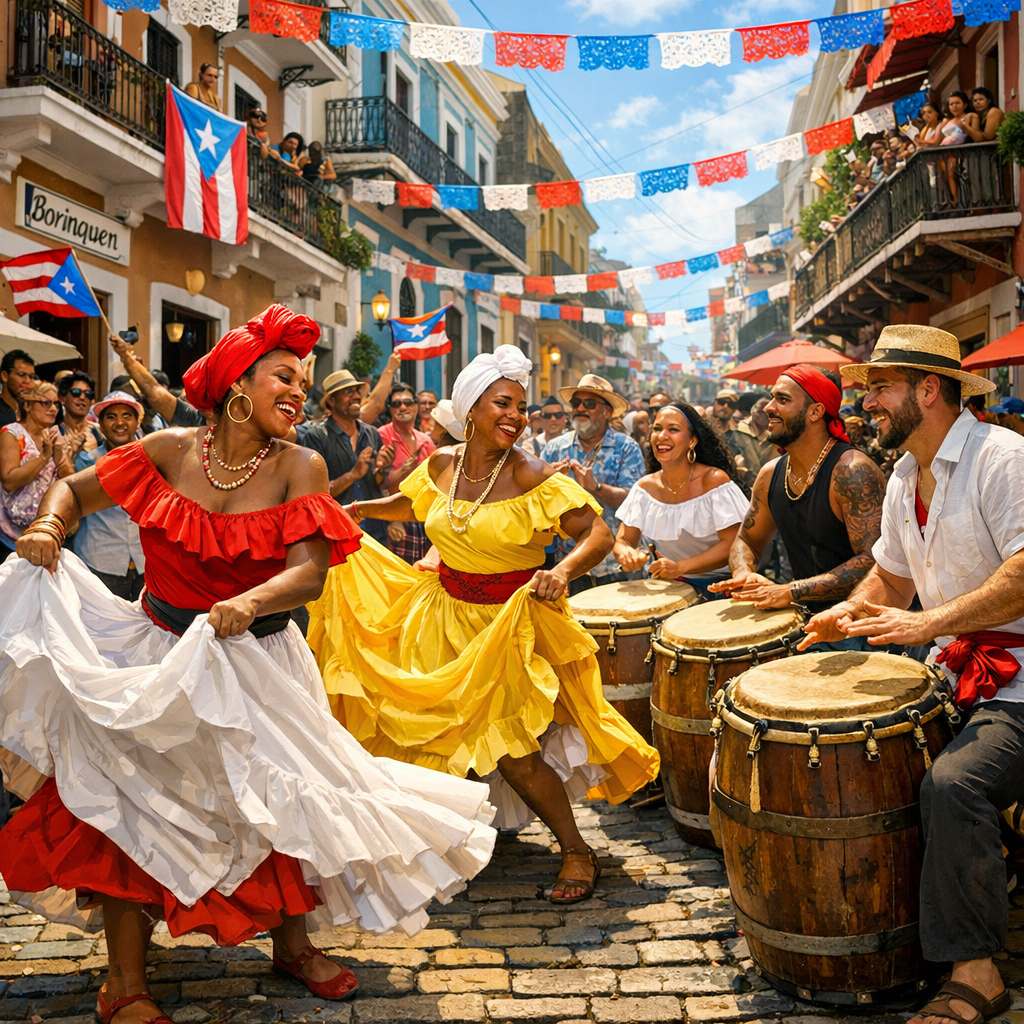
Bomba stands as a testament to Puerto Rico’s rich cultural tapestry, embodying the island’s African heritage through its dynamic rhythms and expressive dances. Originating in the 17th century among enslaved Africans on sugar plantations, bomba has evolved into a powerful symbol of resistance, identity, and communal celebration.
Origins and Evolution
Developed by enslaved Africans in the 16th and 17th centuries, bomba served as a form of social communication and resistance against oppression. It combines drumming, singing, and dance, creating a vibrant expression of Afro-Puerto Rican culture. Over time, bomba has incorporated elements from Taíno instruments and European dances, reflecting the island’s diverse cultural influences.
The Bomba Performance
A traditional bomba performance is a dynamic interplay between dancers and drummers. The dancer initiates movements, known as piquetes, which the lead drummer, or subidor, mirrors in real-time, creating a spontaneous dialogue. This interaction is central to bomba, emphasizing improvisation and mutual responsiveness. The ensemble typically includes maracas, cuá (two wooden sticks), and the bomba barrel, a large drum played with the hands.
Regional Variations
Bomba has developed distinctive styles across Puerto Rico. In Ponce, the style blends Spanish and African elements, with dancers often wearing traditional attire that reflects these influences. The Loíza style, prevalent in the north, features more African-based movements, with dancers emphasizing hip and shoulder isolations and improvisational steps. Other notable styles include those from Mayagüez in the west and Santurce near Old San Juan.
Bomba in Contemporary Culture
In recent years, bomba has experienced a resurgence, with artists like Bad Bunny incorporating its rhythms and dances into mainstream performances. His 2025 album “Debí tirar más fotos” features bomba elements, and his Super Bowl halftime show in February 2026 showcased bomba dancers and drummers, bringing this traditional art form to a global audience.
Experiencing Bomba
For those interested in experiencing bomba firsthand, the annual festival of Santiago Apóstol in Loíza, held in late July, offers vibrant street processions and bomba performances. Additionally, cultural centers and dance schools across the island offer classes and workshops, providing opportunities to learn and participate in this rich tradition.
Bomba remains a vital part of Puerto Rico’s cultural identity, connecting the past with the present and continuing to inspire new generations through its powerful rhythms and expressive movements.