

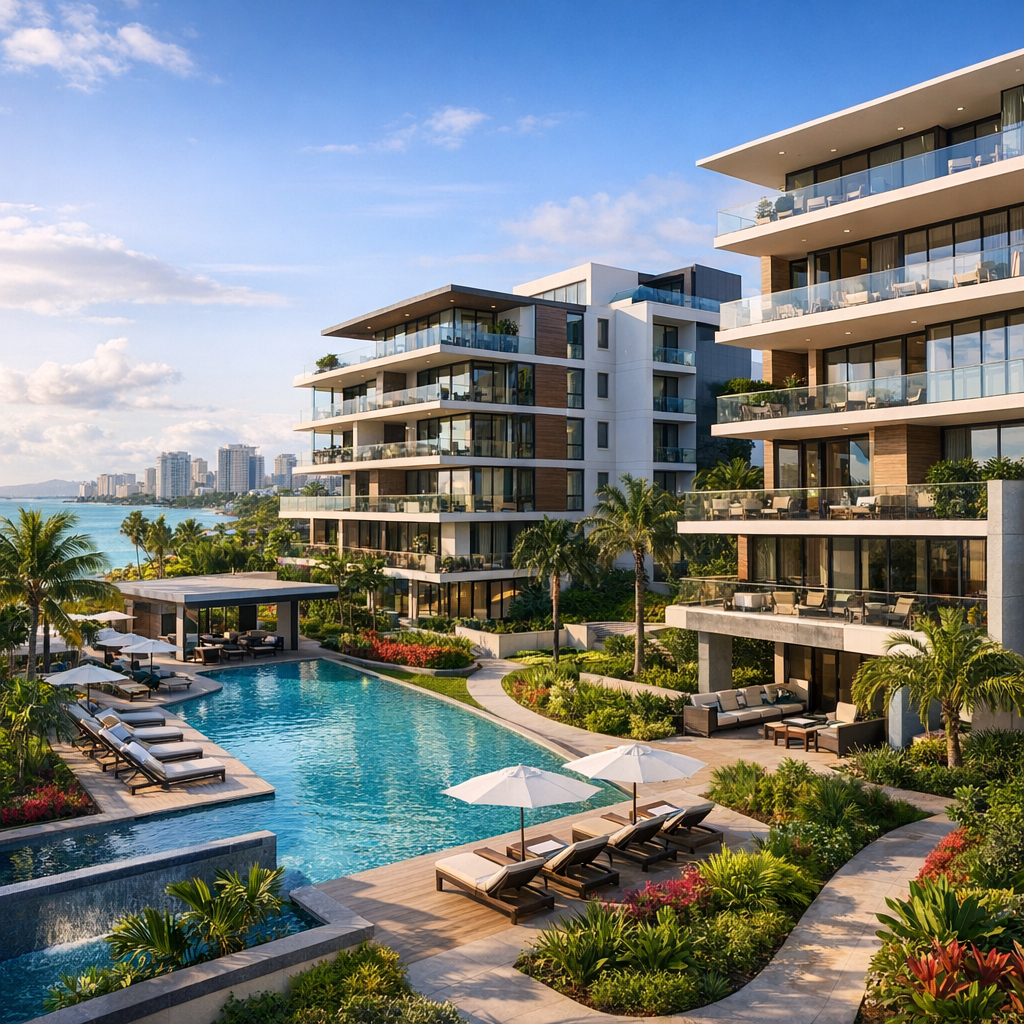
Puerto Rico’s real estate market is experiencing significant transformations, marked by rising property prices, evolving rental dynamics, and new housing developments. Understanding these trends is crucial for prospective buyers, renters, and investors.
Rising Property Prices
Recent data indicates a substantial increase in residential property prices across the island. In the fourth quarter of 2025, the seasonally-adjusted purchase-only house price index in Puerto Rico rose by 14.95% compared to the previous year. This growth follows year-on-year increases of 2.55% in Q3 2025, 12.98% in Q2 2025, 14.78% in Q1 2025, and 17.27% in Q4 2024. Factors contributing to this upward trend include heightened demand, a robust tourism sector, and improved construction activity.
Rental Market Dynamics
The rental market is also undergoing notable changes. The surge in short-term rentals, increasing from approximately 1,000 units in 2014 to over 25,000 in 2023, has led to challenges such as tenant displacement and rising housing costs. While short-term rentals have boosted employment and tourism, they have also contributed to evictions and increased living expenses. To address these issues, recommendations include establishing a public registry for short-term rentals, classifying them as businesses, and increasing room taxes to fund affordable housing initiatives.
New Housing Developments
Several new housing projects are underway to meet the growing demand. For instance, the Lumen Lifestyle Complex in San Juan is a 10-story mixed-use development featuring 194 two- and three-bedroom units, along with an underground parking structure for 390 cars. This project aims to enhance urban living by integrating residential spaces with commercial amenities.
In Ponce, the Terra Señorial development comprises 96 two-level single-family homes. The project includes comprehensive site preparation and infrastructure work, reflecting a commitment to expanding housing options in the region.
Conclusion
Puerto Rico’s real estate market is in a dynamic phase, characterized by rising property values, shifting rental patterns, and active development projects. Staying informed about these trends is essential for making well-informed decisions in this evolving landscape.